
The faceless strategy was partly fear wearing a strategy costume.
There. That is the confession underneath the confession I made in Part 1, “The Shielded Life: Confessions of an AI-Enhanced Human,” published October 21. I said my experiences are real, AI helps me enhance and polish the way I share them, and I review the work for accuracy. That was true. It was also the first layer.
The harder truth is that being faceless felt safe. And some of what I was protecting was my privacy. Some of it was me hiding.
I can say that plainly without turning it into a tragedy. I am a Major. I know the difference between naming a fact and surrendering to it. So let me name it: I was ashamed to show my chin. The gray in my hair. My body. Even saying that now, with my face forward, is not comfortable. I am not going to pretend it is.
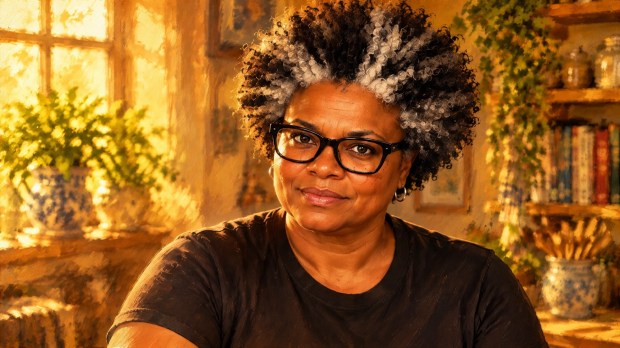
What I was hiding
A camera makes a person think they need to solve every part of their appearance before they are allowed to speak. The angle. The light. The hair. The body. The face. You can find a hundred small reasons to wait until you feel more ready.
I had a strategy that made the waiting sound sensible. Protect the perimeter. Keep the focus on the idea. Stay out of frame. Privacy was a legitimate reason, and it still matters to me. But privacy was not the whole story. Part of my faceless approach was fear dressed in a well-written plan.
That is not an indictment. It is an honest inventory.
I had built a way to publish without having to look at myself while I did it. Useful? Yes. Comfortable? Absolutely. The trouble is, comfort can become a very convincing chief of staff. It can keep presenting the same recommendation long after the mission has changed.
The numbers gave me a turn
Then I looked at my own YouTube Studio dashboard. Not a guru’s chart. Not a promise about what an algorithm rewards. My own early-channel numbers, as shown in the dashboard screenshot I reviewed on October 26.
“Meanwhile, on the stove: great northern beans and smoked neck bones, low and slow,” published October 22, had 72 views. “Day 2: First full morning in the Valley,” published October 15, had 77. “Day 3 Soul of the Valley,” also published October 15, had 55.
Those real kitchen and retreat-morning pieces had me, my face, my voice, and my life in them. The concept-only Shorts were in a different range: “Part 2 Scams: Putting the fraud triangle on television” had 2 views; “Two curriculums at once: the certified fraud examiner exam, and reality television. Part 1” had 0; and “The shopper named below is a real person” had 3.
Small numbers. Early days. I am not going to dress them up as a triumph or announce that I cracked the algorithm. I did not. The pattern in my own analytics is simply directional: the personal, lived-in pieces drew more views than those concept-only talking-point pieces. The gap is large enough to notice. It is not proof of a universal rule.
It is, however, useful information. The real kitchen mattered. The real morning in the Valley mattered. The more people could see and hear me in the experience, the more the work seemed to connect. That’s not a verdict on every other kind of video I make. It is a signal about what feels like mine.
The Soul of the Valley content has always been about an experience, not a set of talking points. And a pot on the stove is not a theory. It is a pot on the stove, steaming away while I am right there with it.

The compromise became the identity
The answer was not to abandon my boundaries. It was to stop confusing boundaries with erasure.
So I chose a compromise that became an identity: an AI-enhanced version of my own natural fro, gray streaks and all, and my own voice. The avatar carries my likeness. It is not somebody else’s face borrowed to make a brand look polished. The voice is mine, whether I’m recording it directly or using my cloned voice profile. AI helps with presentation; it does not manufacture the life behind the words.
The beans were real. The retreat mornings were real. The opinions are mine. And I review the finished work for accuracy. That standard has not changed since Part 1. What has changed is that I am letting more of myself be visible in it.
The fro is not a disguise. It is not a request for permission. It is a version of me that makes the choice to appear feel possible. And the face forward is not an invitation for strangers to decide how much of me they are entitled to have.
There is room between hiding completely and handing over the keys. I am learning to stand in that room without apologizing for taking up space.
A shield is a choice, not a disappearance
“Shielded” used to sound, in my mind, like staying out of sight. Keep the work moving. Keep myself tucked away. Nobody gets access; nobody gets a chance to judge what I am already judging.
That is not the definition I am carrying forward.
A shield can mean choosing what to show, when to show it, and what stays protected. It can mean letting people see me stirring a pot or talking about a morning in the Valley without giving them unrestricted access to the rest of my life. It can mean building a visible presence while keeping my business, my customers, and my systems behind a perimeter. Engagement is useful. Access is earned.
I can share an experience without publishing every private detail that surrounds it. I can be recognizable without being endlessly available. And I can bring my face to the work without turning my whole life into public property.

That distinction matters to me more than a view count. The numbers helped me see a pattern; they did not get to set my terms. I will keep watching what connects, and I will keep deciding what belongs in the frame.
This is also a personal brand, whether I use those words or not. People can hear my voice and see my face and understand that the stories belong to a particular person with a particular point of view. But a brand is not a public-access pass. My work can be open while my perimeter remains intact.
I’m still learning how to let that be enough. I do not need to pretend I was never self-conscious. I do not need to scrub out every gray strand or wait for a version of my body that has never existed. I can be candid without making my appearance a debate, and visible without making myself available for everything.
Face forward, on my terms
The face did not break the Shielded Life. It claimed it.
I spent time thinking that showing myself would make the work less protected. Instead, it made the boundary clearer: this is me, this is my voice, and this is what I choose to share. The shield is still there. I am simply standing behind it with my face visible.
And about that chin, the gray, and the body? I am learning to let them come with me. Not because I have finally solved every feeling about them, but because I am done letting discomfort make every decision.
I’ve got a little Cheshire-cat energy about it now: hated into a whole different tax bracket, smiling the whole way. Not because the work is finished. Because I finally stopped waiting to look like somebody else before I let people see me.
Face forward is the standard now. Not everything exposed. Not every boundary surrendered. Face forward: clear-eyed, deliberate, and on my terms.
